Osnovna škola Matije Gupca

Zagreb Student-Led Riddle Tour
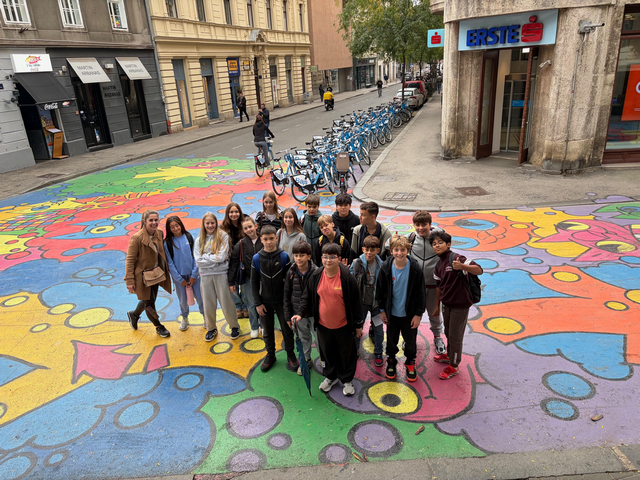
On October 21, we took a walking tour through the streets of Zagreb. We solved fun location-based riddles to find our way around the city while learning about the cultural and historical sights of the Upper and Lower Towns. We also shared our knowledge of Zagreb with our international guests from Poland, Portugal and Türkiye, who visited our school as part of the Erasmus+ programme.
Following the clues and riddles prepared by teacher Mirna, we explored some of Zagreb’s most important cultural and historical sights. Along the way, under the guidance of our Geography teacher, Ms. Magdalena Geček, and History teacher, Mr. Leon Šijanski, students presented short, site-specific talks about the people behind Zagreb’s street and square names, sharing interesting facts about the city’s history and heritage.
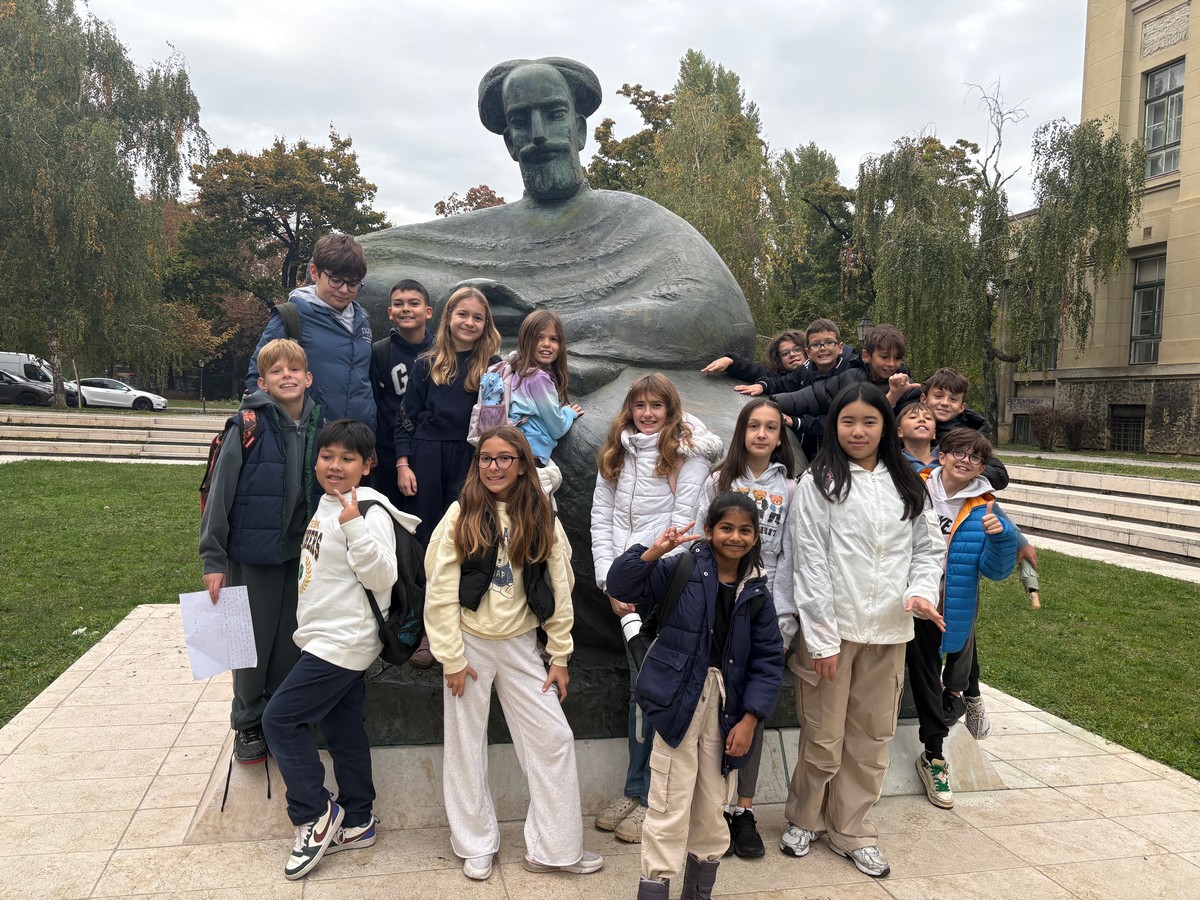
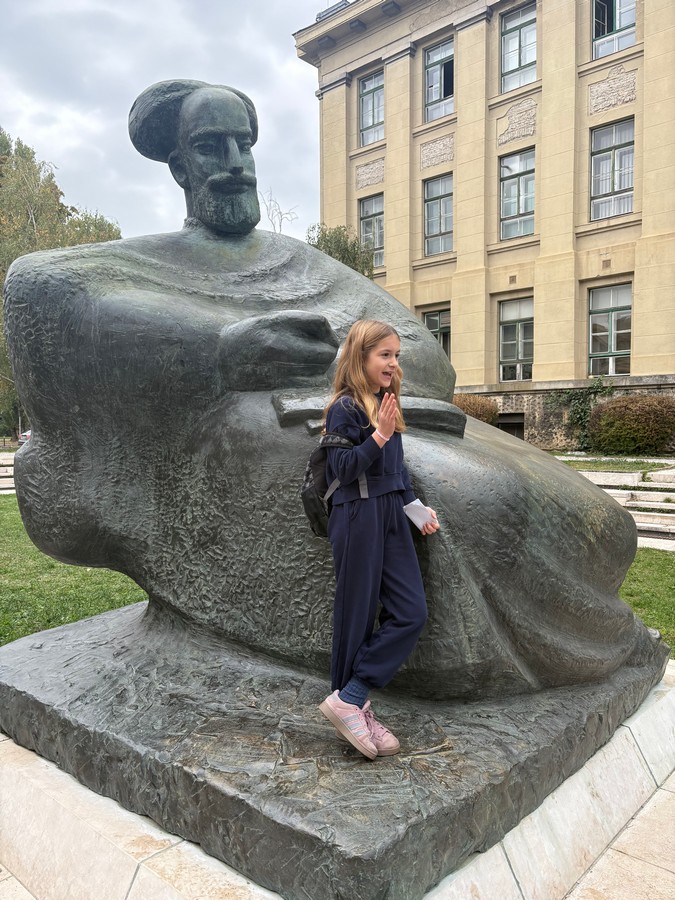
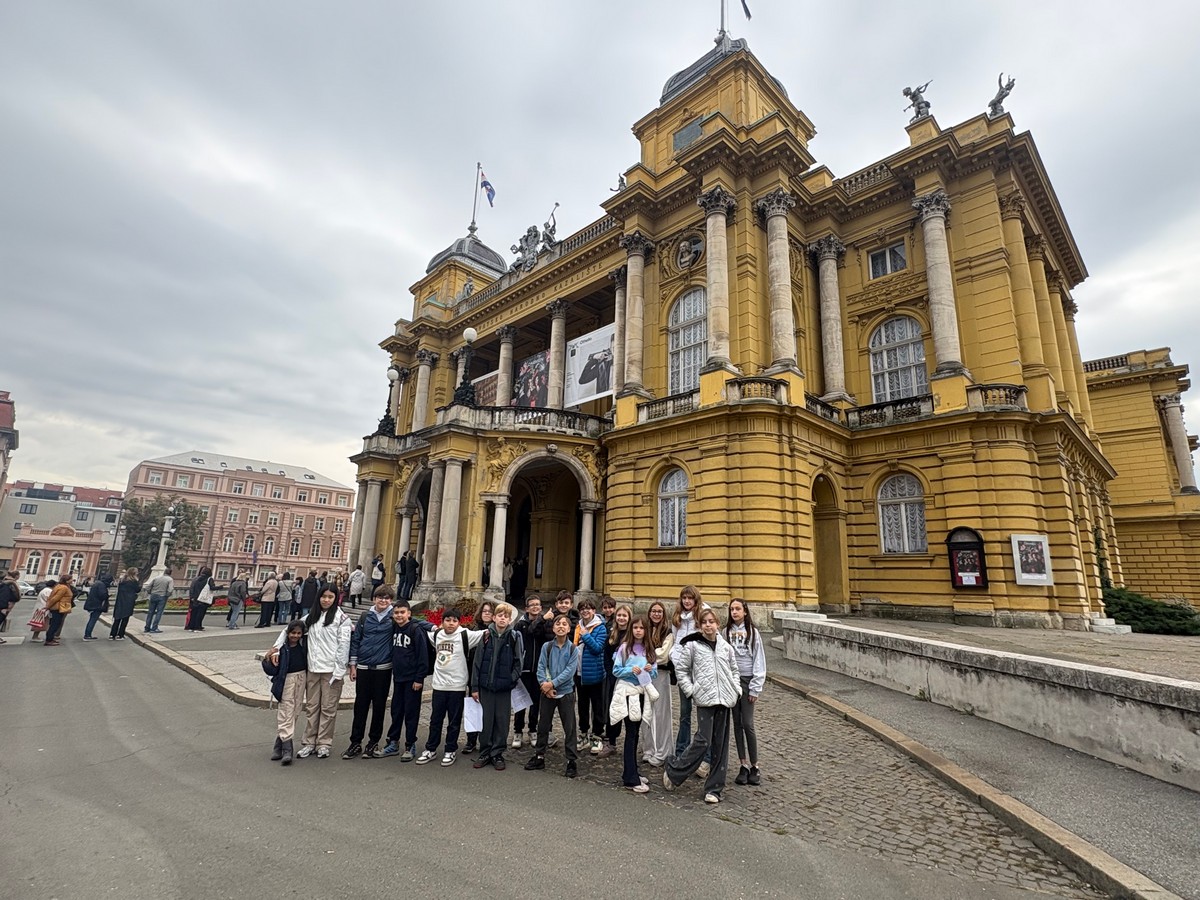
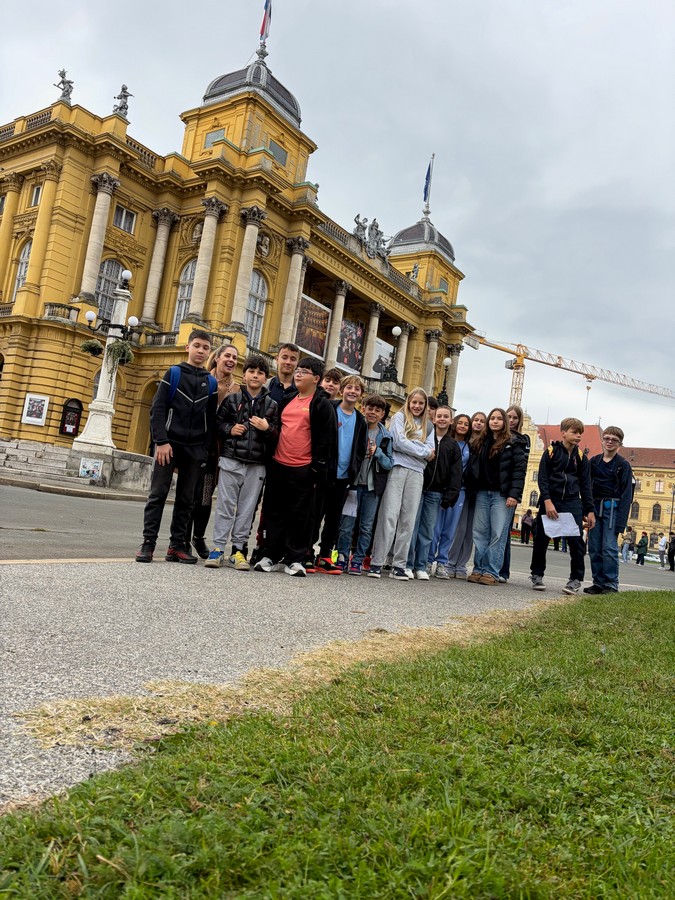
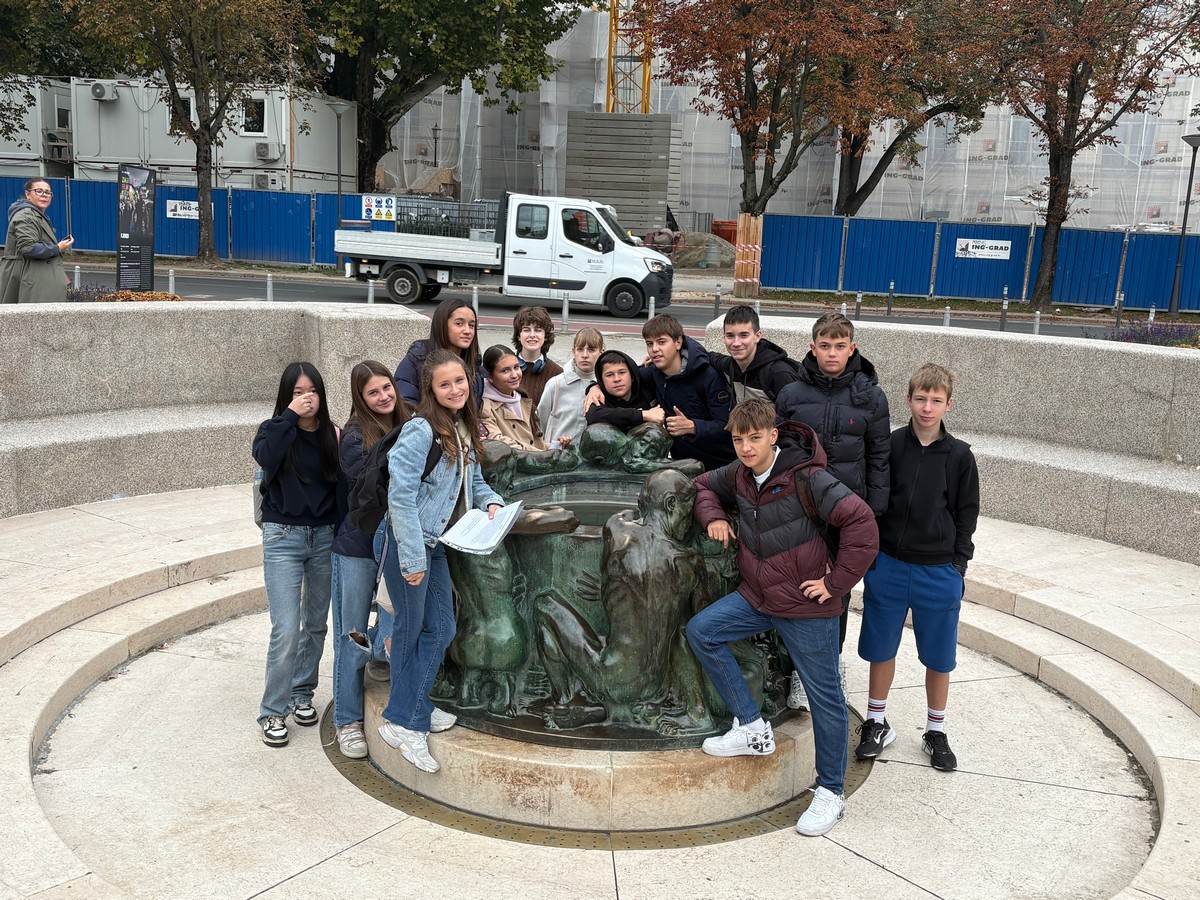
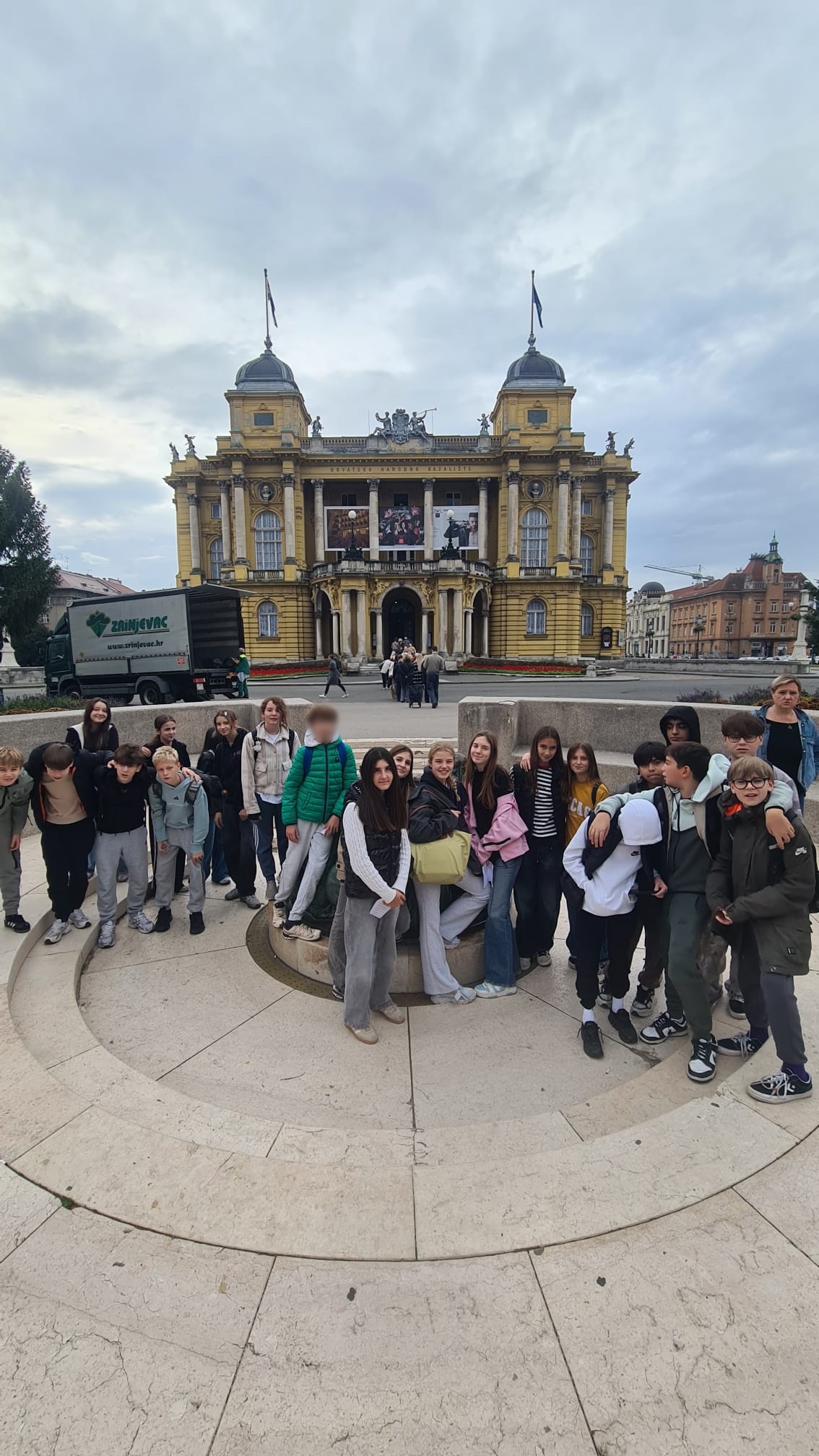
Our tour began at Marulić Square and Mažuranić Square, before we continued to the Croatian National Theatre, where we admired Ivan Meštrović’s sculpture Well of Life. We learned that Marko Marulić was credited with the first known use of the word psychology; that Ivan Mažuranić coined words that have become part of standard Croatian, including words for ice cream, accounting, rhinoceros and sculptor; and that the Croatian National Theatre took only sixteen months to build.
From there, we headed to Ban Jelačić Square, the centre of the city and one of the most popular meeting points for Zagreb’s residents. Our next clue led us to the Manduševac Fountain, which is associated with a legend about how the city got its name. According to one version of the legend, a young knight returning from battle asked a girl named Manda to scoop him some water from a spring, saying, “Zagrabi, Mando” (English: “Scoop it, Manda”). The story explains the name Manduševac and is traditionally linked to the name Zagreb.
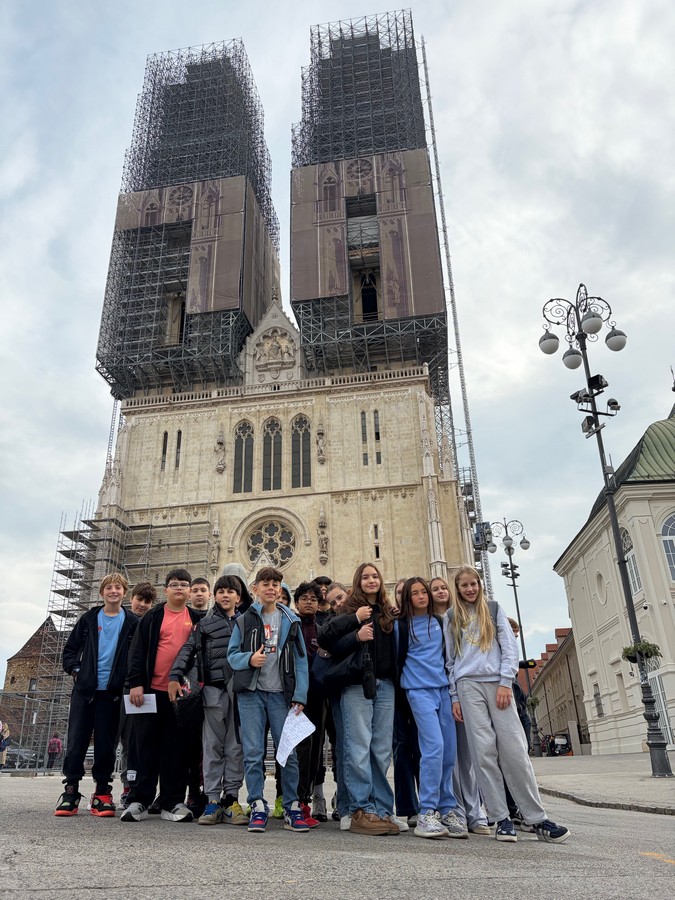
Our next stop was Zagreb Cathedral, where we admired its impressive Neo-Gothic architecture. The 2020 earthquakes severely damaged the cathedral, and the towers were later shortened for safety reasons. Restoration work has been underway to preserve this important historical landmark.
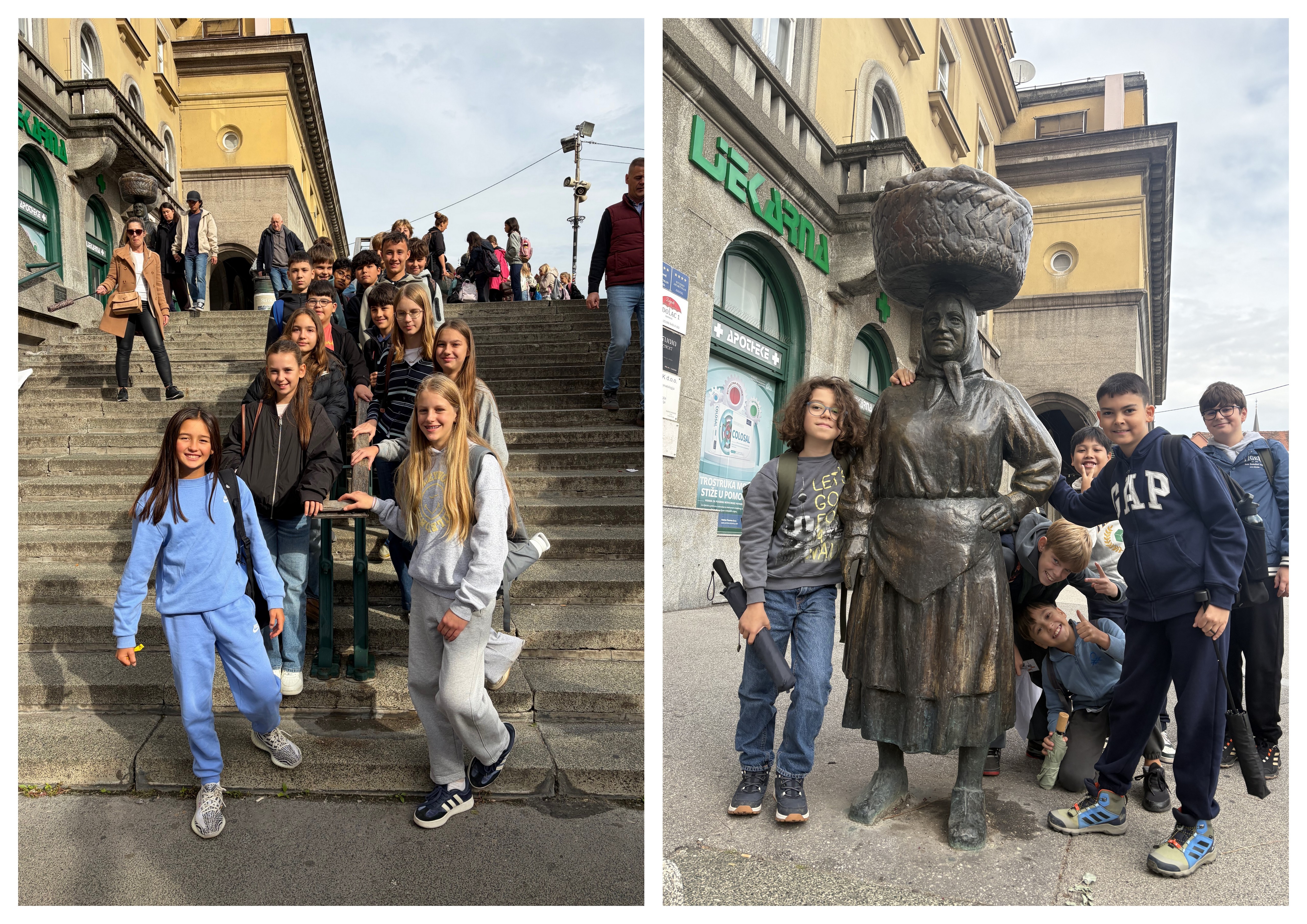
Overlooking the main square and standing in the shadow of the cathedral is one of Zagreb’s most precious resources: Dolac Market, often called the belly of Zagreb. Here, we could feel the city’s lively atmosphere and experience local flavours. The popular kumice, or female farmers who sell their produce, contribute to the market’s unique character and popularity. Dolac Market is currently being renovated, so its outdoor stalls have temporarily moved to Ban Jelačić Square and nearby streets.
We continued our walk to the statue of Marija Jurić Zagorka in Tkalčićeva Street and then to Bloody Bridge. Marija Jurić Zagorka, the first Croatian female journalist, wrote the famous novel The Secret of the Bloody Bridge, which helped popularise the legends associated with this place.
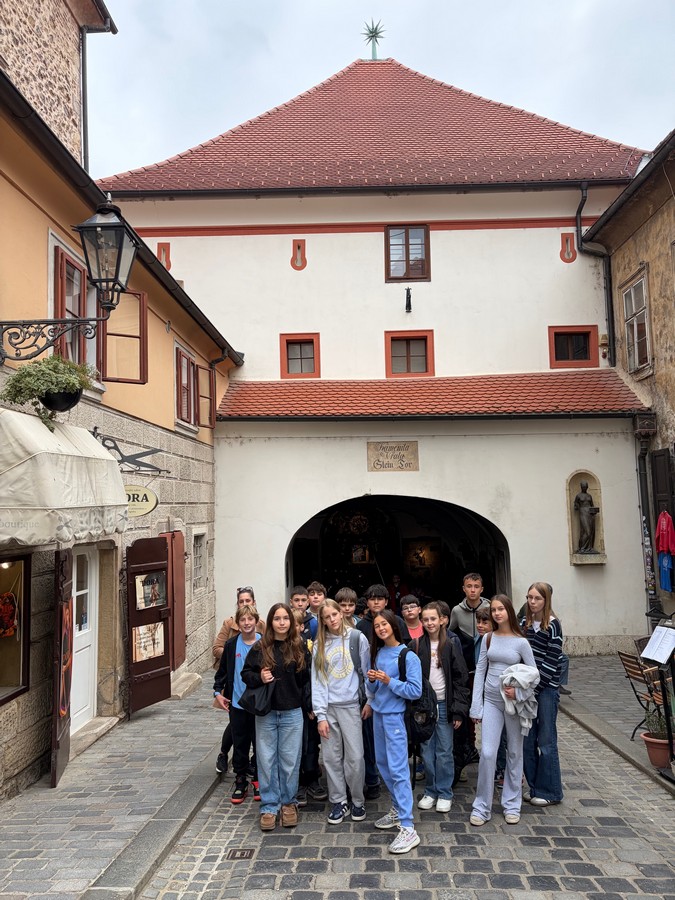
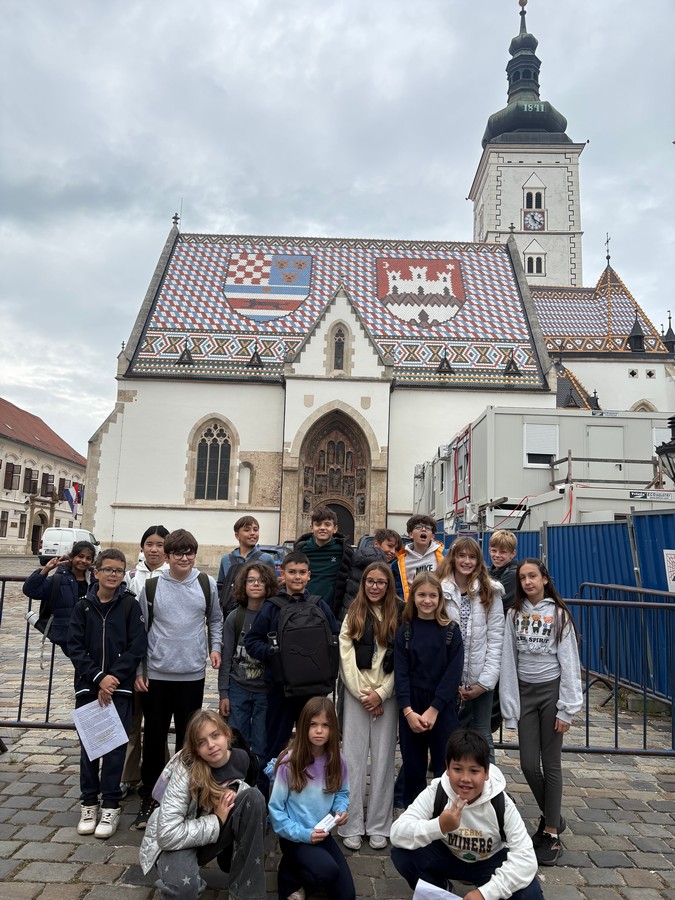
Stone Gate, once the main entrance to the medieval town, was our next stop at the top of Radićeva Street. We then reached the heart of the Upper Town and one of Zagreb’s most important squares: St. Mark’s Square. St. Mark’s Square has long been an important centre of political and public life in Zagreb. Historically, important public decisions were announced here. In the central part of the square once stood a pillar of shame, where people were tied and punished by court order. Matija Gubec, the leader of the Croatian Peasants’ Revolt, was also punished here for his role in the rebellion. The square is best known for its iconic Church of St. Mark, easily recognisable by its colourful tiled roof bearing the coats of arms of the medieval Kingdoms of Croatia, Dalmatia and Slavonia, as well as the City of Zagreb.
We continued to one of Zagreb’s most recognisable landmarks, Lotrščak Tower, built in the 13th century to guard the southern gate of the Gradec town walls. It is famous for the Grič cannon, which fires daily at noon to announce midday to the citizens of Zagreb and their guests. At the Strossmayer Promenade and Vranyczany Plateau, we took a break and enjoyed one of the most beautiful panoramic views of the Croatian capital.
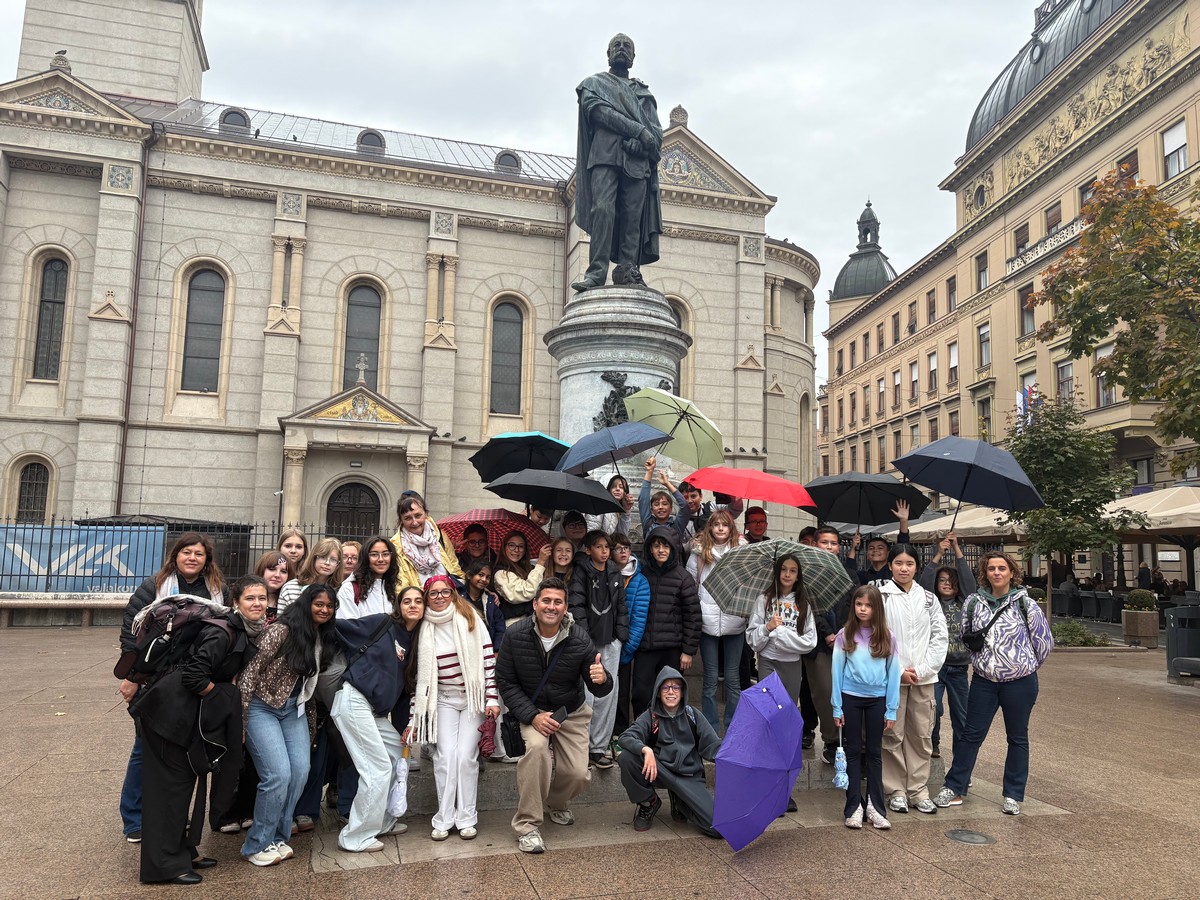
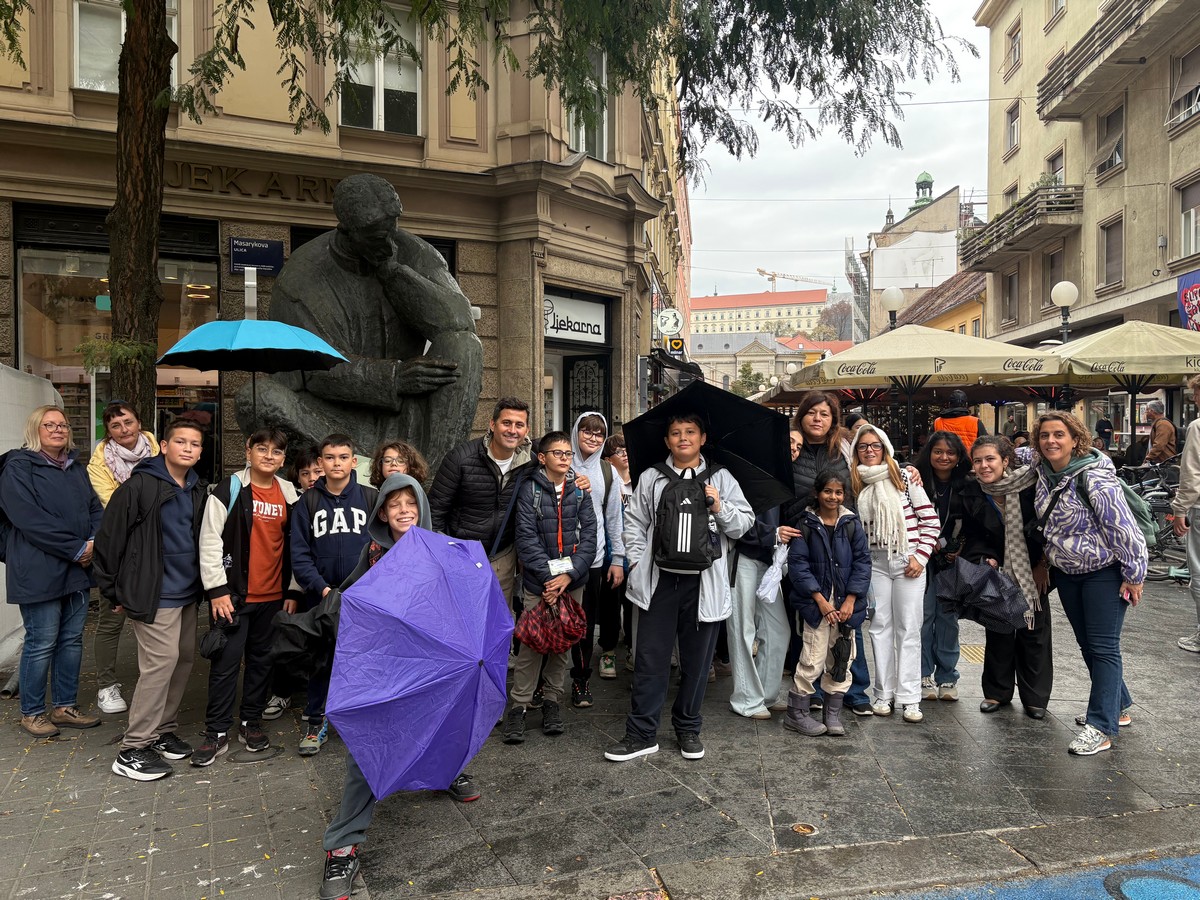
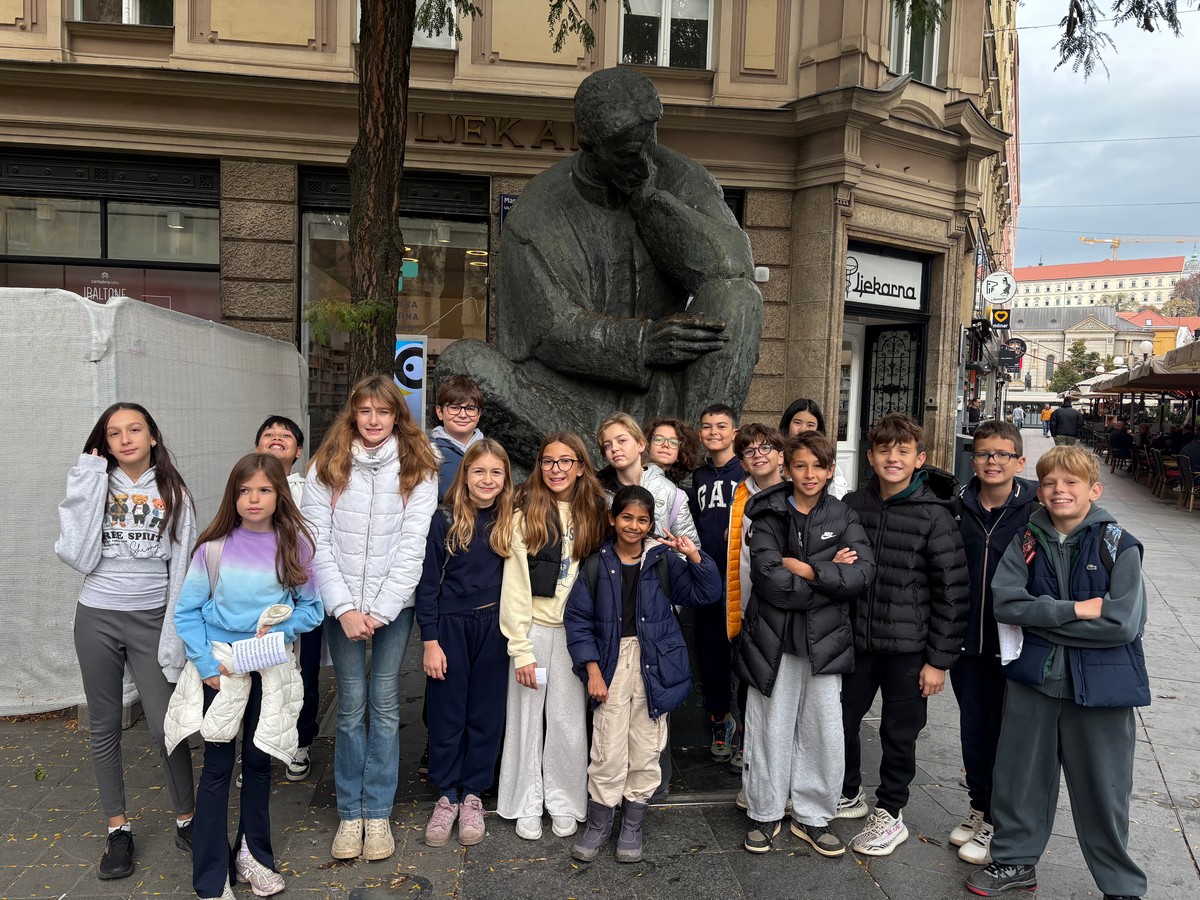
On our way back through the city, we explored Preradović Square, popularly known as Flower Square. We discovered that Petar Preradović was a well-known Croatian poet and military general, adding another piece to the puzzle of Zagreb’s rich history and culture. We then continued to the statue of Nikola Tesla in Teslina Street, where we found out more about the life and achievements of one of the world’s most famous inventors.
We ended our tour with an ice cream treat. It was a perfect mix of exploring, learning and relaxing. Following clues, solving riddles and sharing our knowledge made the day both fun and memorable.
Discover more highlights from our Zagreb Riddle Tour Scrapbook and photo gallery!
MYP Journalist Group